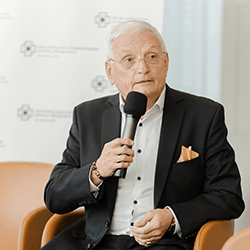
The conference “Modern Hospital 2026: Innovative + Efficient + Safe” organized by OSSP, the Polish Association of Private Hospitals, took place on 9 March 2026 in Warsaw. The event brought together key decision-makers, managers of both private and public healthcare facilities, and leaders from the technology sector, becoming a platform for important discussions about the future of Poland’s healthcare system.
The conference was opened by the President of the Association, Andrzej Sokołowski, who highlighted the tremendous progress made by Poland’s private hospital sector over the past 25 years. Today, the sector performs more than 20% of all surgical procedures in the country, constituting an essential and fully recognized pillar of the system. Expert debates revolved around five main thematic areas that defined development directions for the coming years.
The Future of the System: Stability and Sustainable Investment Needed
The first session brought reassuring messages from the Ministry of Health and the National Health Fund (NFZ). Deputy Minister of Health Tomasz Maciejewski assured that no reforms excluding the private sector are planned; on the contrary, significant investment support from the National Recovery Plan and the Medical Fund is expected.
Marek Augustyn, Vice President of the NFZ, announced plans to extend the so-called “hospital network” until 2029, ensuring stability and time for restructuring. A revision of pricing for services with high medical device costs was also announced. Representatives of the Association advocated replacing the current often opaque pricing model with a transparent base rate system, adjusted for quality of care and incorporating conscious patient co-participation.
Success of Polish Facilities in Europe
The second session was a moment of great pride. It highlighted the success of Polish institutions in the prestigious European Private Hospitals Awards (EPHA). The top prize in the “Patient Experience” category last year went to OKULUS PLUS Center for Ophthalmology and Optometry, while the previous winner was Warsaw’s MEDICOVER Hospital.
These achievements clearly demonstrate that Polish private hospitals not only meet European standards but often set them. Deloitte, the event’s partner and host, declared support for Polish facilities in preparing applications for future editions of the competition.
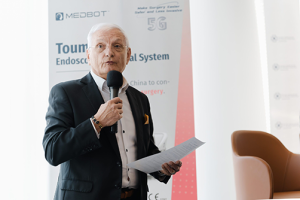
Dr Andrzej Sokołowski, President of OSSP
Program Highlight: Public-Private Cooperation Debate
The highlight of the conference was a dynamic debate on cooperation between the public and private sectors. Participants agreed that the artificial division between public and private healthcare is harmful from the patient’s perspective.
Speakers emphasized that in a market economy both sectors must operate under the same economic rules. Successful examples of synergy include outsourcing medical laboratories and joint clinical research. A social campaign titled “I cancel, I don’t block” was presented as an example of effective collaboration.
However, significant systemic barriers were also discussed. Experiences from the Żywiec hospital, built under a public-private partnership (PPP) model, highlighted challenges such as the lack of direct NFZ involvement in agreements. Calls were made for legislative changes allowing private entities to acquire majority stakes in indebted county hospitals and for broader deregulation efforts. Regulatory fragmentation was also criticized, including barriers to joint initiatives due to administrative constraints like separate tax identification numbers.
Digital Health: Innovation vs. Technological Barriers
The digitalization panel showcased both cutting-edge innovations and everyday IT challenges. Experts highlighted that e-health is one of the fastest-growing areas in MedTech.
Examples included the use of artificial intelligence to reduce PET scan times by half and lower radiation doses by 50%, AI-driven patient recruitment for clinical trials, and systems supporting physicians in managing polypharmacy. Cloud security and infrastructure were also discussed.
Government representatives announced the launch of the “Intelligent Services Platform” and encouraged adoption of the Central e-Registration system, which participants could test during the conference.
At the same time, speakers criticized poor interoperability of hospital IT systems, pointing out hidden integration costs and the continued need for manual data entry by medical staff.
Cybersecurity: A Race Against Time and Hackers
The final session took place under the shadow of an ongoing cyberattack on a regional hospital in Szczecin. It included the official launch of CYBERMANUAL, a comprehensive guide for building organizational resilience against cyber threats.
The discussion revealed differing perspectives on cybersecurity. Experts emphasized that human error remains the weakest link, with phishing still affecting a significant portion of staff. Others argued that data theft—not system paralysis—is now the primary goal of cybercriminals.
Key performance indicators for IT security were proposed, including the number of inconsistent security tools, incident detection time (MTTD), and system recovery time (MTTR). Practitioners also highlighted the scale of daily cyber threats and resistance among medical staff to implementing basic security measures like multi-factor authentication.
Representatives from the e-Health Center reminded participants about free cybersecurity tools available to hospitals, including vulnerability scanning and emergency response support.
Key Conclusions and Industry Demands
In closing, Andrzej Sokołowski outlined the sector’s key demands:
- Security funding: IT and cybersecurity costs are rapidly increasing and must be included in NFZ procedure pricing.
- Central protection system: No single hospital can defend itself alone—there is a need for a nationwide early warning and protection system.
- Continuous education: Hospitals are encouraged to adopt the CYBERMANUAL framework.
The organizers thanked all speakers, partners, exhibitors, and participants for their contributions to the development of modern healthcare in Poland.
Readers are invited to follow the Association’s YouTube channel and LinkedIn profile, where a video report from the conference is available.