European Private Hospital Awards (EPHA) 2025
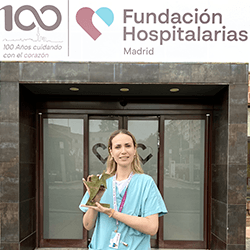
The winner in the category: Innovation in Preventive Care
The Fundación Hospitalarias Madrid Hospital General in Madrid explorered how social media can be strategically leveraged to improve digital health literacy (DHL) in the general population, thereby enhancing preventive health outcomes. Recognizing that misinformation and lack of access to reliable health information are barriers to effective prevention, the project identifies key patterns of social media use and their relationship with health literacy and preventive behaviors.
What makes your project so special?
My project is special because it demonstrates how social media can become an effective and scalable tool for improving health literacy among the general population. By analysing how people access interpret and apply health information through social media, the project provides evidence that these platforms can strengthen individuals’ capacity to understand health-related content, empowering them to make more informed decisions and ultimately contribute to healthier communities.
What makes it distinctive is its combination of scientific rigor with real-world digital engagement, showing that social media are not just communication channels but also strategic spaces for strengthening public health education and supporting individuals in developing better health literacy.
What does this award mean to you and your teams?
This award is an important recognition of the value of using innovative methods such as social media to advance public health. For me and my team it represents a validation of years of research effort and a motivation to continue exploring how digital tools can improve people’s understanding of health.
It also strengthens our commitment to making evidence-based health information more accessible, equitable and meaningful for diverse audiences. Receiving this award encourages us to expand collaborations and continue contributing to a healthier and more informed society.
The project
The initiative combined quantitative and qualitative methods to explore digital health literacy (DHL) in preventive care. A total of 1,307 participants from the Spanish general population completed a survey, confirming the high penetration of social media as a source of health information. 100% had encountered health content on platforms, and 72.1% searched for it intentionally. The most used platforms were Instagram (66.6%), WhatsApp (64.6%), and TikTok (41.6%). Main motivations were immediacy (51.5%), privacy (19.6%), and convenience (16.3%). Only 1.1% considered social media content always reliable, and 27.7% never verified the information. The median DHL score was 24/40, with lower scores in older and less-educated individuals (p<0.001). A significant association was found between active use of social media and higher DHL levels (p<0.001).
The qualitative phase involved 17 participants (general population and health influencers) via interviews and focus groups. Findings revealed insufficient critical skills to assess online health information, especially in vulnerable groups. Health professionals described challenges in communicating scientific content while countering misinformation. All participants agreed on the need to improve DHL from early ages, promote content verification, and recognize social media as a powerful tool in preventive health if used responsibly.
Objectives:
- To assess the current level of digital health literacy among adult social media users.
- To identify the most trusted and frequently used platforms for seeking health-related information.
- To determine demographic and behavioral factors linked to higher digital health literacy.
- To connect DHL levels with self-reported preventive health actions such as early detection, risk avoidance, and engagement with health services.
- Expected Results:
- Improved understanding of which social media environments support trustworthy health communication.
- Actionable insights for designing targeted public health campaigns through the most impactful digital channels.
- Evidence-based recommendations for health professionals and institutions to integrate social media into preventive care strategies.
- Foundations for scalable interventions that address digital inequalities and promote informed decision-making in health.
Expected Results:
This initiative placed digital health literacy (DHL) at the center of patient empowerment, transforming how citizens access, understand and engage with health information. By deeply analyzing how the general population interacts with social media content, the project revealed structural gaps in health comprehension, critical thinking and informed decision-making. Addressing these gaps directly enhanced patient education and autonomy.