Interview with Lamine Gharbi, President of the French Federation of Private Hospitals (FHP), conducted as part of the preparation of the European forward-looking report on health risks led by Relyens.
Is there a risk that you feel is particularly underestimated by those working in the healthcare sector? And if so, why is it underestimated?
What you identify as ‘risks’ are realities that, unfortunately, are already partly at play within our healthcare system. The shortage of healthcare professionals, the insufficient consideration given to the appropriateness of care and the lack of measurement of the service provided to patients, the budgetary focus on annual budgets, and the delays in prevention and public health – all of this fuels deep concerns among both healthcare professionals and patients.
As for the underestimated risk, it undoubtedly stems from a failure to anticipate future health crises, whatever their nature: certainly, some lessons have been learnt from Covid, but we could have used this unprecedented period to embed a genuine culture of public health in our country. This is not the case. The cyber threat, for example, remains massive given the lack of interoperability in our information systems.
However, in the face of concerns about the sustainability of our healthcare system, solutions do exist. In a very constrained economic climate, genuine political will must prevail in order to activate the levers of efficiency that will enable substantial savings to be made whilst improving patient care. I will take one example among many: accelerating the shift towards outpatient care in hospitals, making same-day treatment the norm wherever medically possible, in order to meet patients’ expectations regarding quality, safety and comfort. Such a shift in our organisations is likely to address both the challenges of access to quality care whilst ensuring the relevance of care and the efficiency of our healthcare system. Another essential paradigm shift is the shift towards prevention.
In your view, does your healthcare system have any distinctive features in terms of resilience to the risks you have outlined?
I am an optimist by nature, and France does, after all, have many strengths in the healthcare sector, starting with the excellence of its medical teams and, more broadly, all its healthcare professionals, as well as its innovation and research. Health is a driver of growth and prosperity for a nation, and the impact of our private clinics and hospitals extends across many areas: healthcare, of course, but also social, economic – particularly through the jobs created – and societal…
Our weaknesses lie in our divisions, in fruitless and dogmatic conflicts, particularly between the public and private sectors. When, for example, professionals – nurses, care assistants, and so on – in the private sector are held in lower regard and valued less than their counterparts in the public hospital sector performing identical roles, this undermines the essential complementarity of healthcare provision.
Above all, France lacks a genuine long-term, multi-year health strategy underpinned by clearly stated major public health objectives, backed by the necessary resources. Today, the National Health Strategy has not been published, and even if it were, it should cease to be a catch-all for defining priorities that involve the whole of society – priorities that are allocated clearly earmarked resources and, above all, properly assessed using clear indicators.
We also advocate for a genuine health planning act, similar to those in place for Justice or Defence, which can set out a genuine strategic vision for our health system. It is no longer possible to tolerate short-termism and cost-cutting measures when managing an issue as vital and as high a priority for the French people as health. This is a major ambition for a presidential term of office.
If you had the power to act, what would be the first measure you would implement to secure the future of healthcare facilities?
Clearly, I would revisit the 2016 Touraine Act and its Public Hospital Service, which excludes private healthcare providers.
We need to establish a genuine public health service that brings together providers of all types, with equal rights and responsibilities, united around missions that meet the needs of the population. We must start with needs, not supply, and stop thinking solely in terms of ‘structures’ but prioritise measuring the ‘service provided’ to the patient. Efficiency, which allows us to reconcile the essential savings required in a difficult economic climate with ever-improving quality of care, must also be at the heart of political action.
That covers the substance. As for the process, we are calling for a radical change in the way the necessary healthcare reforms are carried out. We can no longer afford to find out about trade-offs at the last minute, without any consultation with healthcare stakeholders on issues that directly affect them. The latest example is the draft law on decentralisation and state reform, which affects the Regional Health Agencies! Any measure must be taken after assessing its actual benefit for patients and the healthcare system, and every euro must be put to good use for healthcare. Contractual agreements between the State and healthcare stakeholders, based on mutual commitments made in good faith, must replace coercion: we are responsible stakeholders.
Let us hope that the dogmatic view from which private healthcare providers all too often suffer will disappear once and for all, for the 1,030 private clinics and hospitals, which account for 35% of hospital activity in France, are indispensable to the healthcare system. Finally, my last wish is for political stability, which alone allows for the continuity of government action.
What is currently missing to make this initiative a reality? What obstacles do you identify that need to be overcome?
Ideological obstacles, certainly, and excessive compartmentalisation – public/private, local/hospital, health/medical-social – which hinder the smooth flow of the patient’s care pathway. The Covid crisis had broken down barriers and fostered cooperation and collective intelligence across France, but old habits die hard. Only the implementation of a public health service that is inclusive of all will enable us to rise to the challenges of access to care. It is the missions that matter, not the status. We need genuine political will; this is a crucial issue for the upcoming presidential election.
This implies that in every region, everyone – including the regulator – must be held accountable for outcomes for the population. These outcomes would be assessed annually and made public. When something goes wrong, we always think in terms of ‘structures’, resorting to easy scapegoating, rather than thinking in terms of missions and collective commitment, where everyone contributes to shared objectives.
Do you think that hospitals and clinics should – and will – remain at the heart of the healthcare system? How, in your view, can they be better integrated into the wider healthcare ecosystem?
I am absolutely convinced of this, and it has always been at the heart of my trade union work! We see it in France as we do across Europe: without the private sector, healthcare systems cannot survive. Our model is flexible and efficient: in France, we provide 35% of healthcare services using just 17% of health insurance resources. In MCO, it is mainly private practitioners who work in our facilities, thereby fostering a close link with community healthcare. Our accreditation results, our pioneering role in quality, the growing integration of the patient experience… all this demonstrates a model that can serve as an inspiration.
We are already fully integrated into the healthcare ecosystem, and we will be even more so by playing a greater role than ever in public service missions, emergency care, and round-the-clock care… and by leading the way in prevention and innovation. But this also requires public authorities to act as facilitators and to be fair in their recognition of both the private and public sectors, whether in terms of funding, the granting of authorisations or the consideration given to healthcare professionals.
Do you think it would be appropriate to strengthen the resilience and autonomy of our healthcare systems at European level?
Firstly, we should welcome the fact that Europe is increasingly committed to public health and prevention, supporting innovation, and health sovereignty – notably in tackling supply chain pressures, mental health, and the ‘One Health’ approach. All this is happening without European citizens being fully aware of it, which is regrettable. Europe is often used as an easy scapegoat for national failings… Highlighting Europe’s actions in the health sector (the fight against cancer, neurodegenerative diseases, antibiotic resistance, cybersecurity, data and AI, medicines, etc.) would help to better combat Euroscepticism.
We also expect Europe to take action on the training of healthcare professionals and on making healthcare careers more attractive.
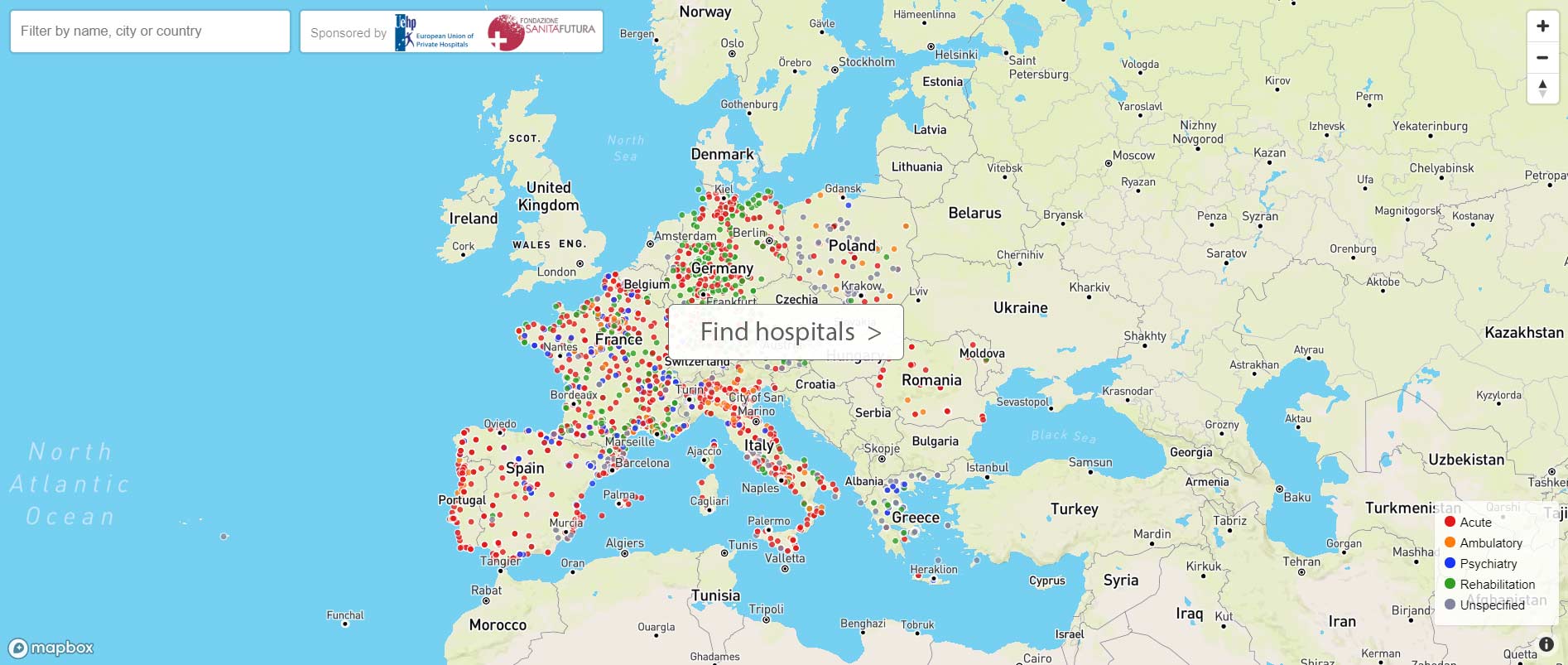
I would like to take this opportunity to commend the remarkable work of the European Union of Private Hospitals (UEHP), which brings together 6,000 private healthcare establishments across Europe and is chaired by Oscar Gaspar. The UEHP represents our views to the European institutions, and issues relating to human resources, quality and innovation in healthcare, as well as the equitable treatment of all healthcare providers, are at the heart of the work carried out under its 2026 Action Plan.
Read the full article in French